Dispatch board
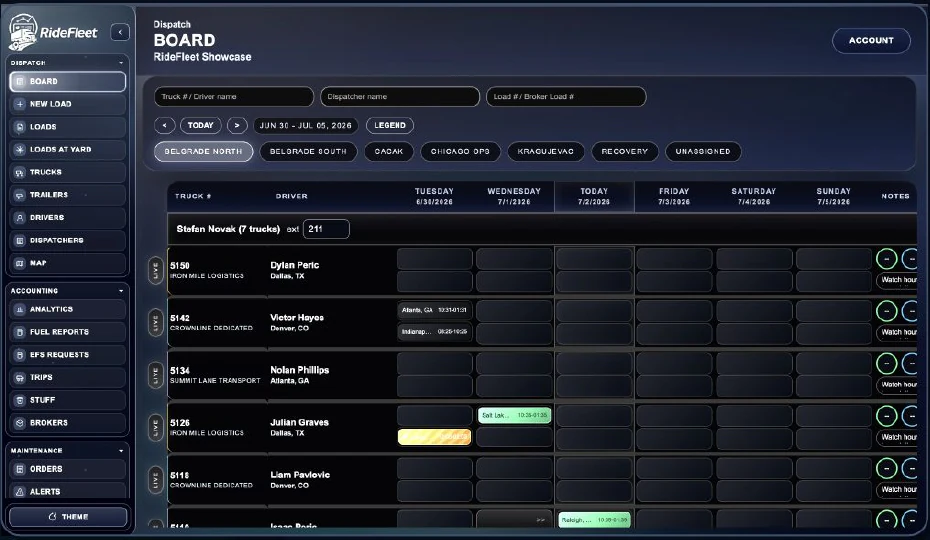
See assignment gaps before they become handoff gaps.
Freight operations, connected
RideFleet gives dispatchers, fleet teams, and back-office operators a shared place to move loads, vehicles, documents, maintenance, and reporting forward.
Registration remains subject to account and safety checks before access is activated.
The operating loop
Keep the record moving instead of rebuilding context at every desk.
Capture the load, route, parties, requirements, and source documents.
Assign the right truck, trailer, driver, and dispatcher from a shared board.
Keep status, exceptions, and operational notes attached to the load record.
Organize the paperwork operators need to complete downstream work.
Move completed operational data into reporting and accounting workflows.
Product views
Explore five connected parts of the RideFleet workspace. Tabs change only when you choose them.
Dispatch board
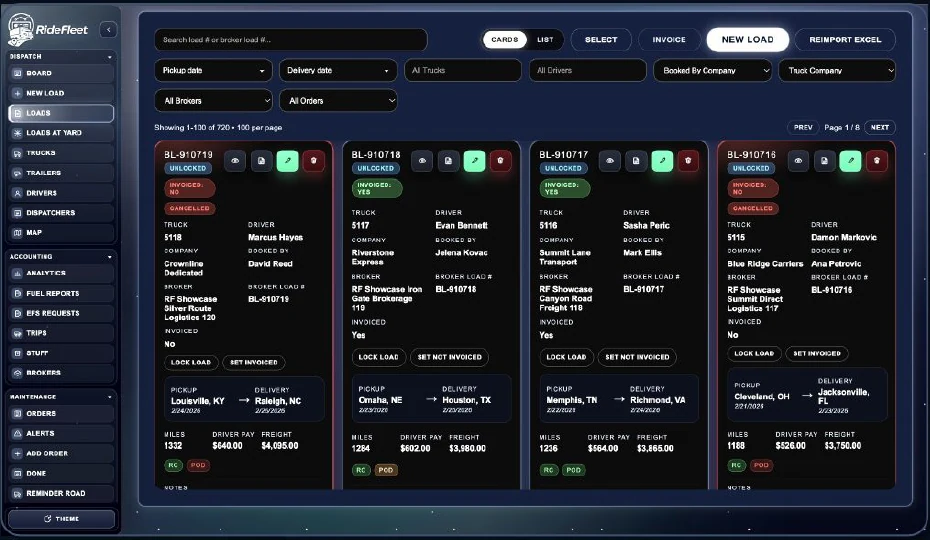
Load records
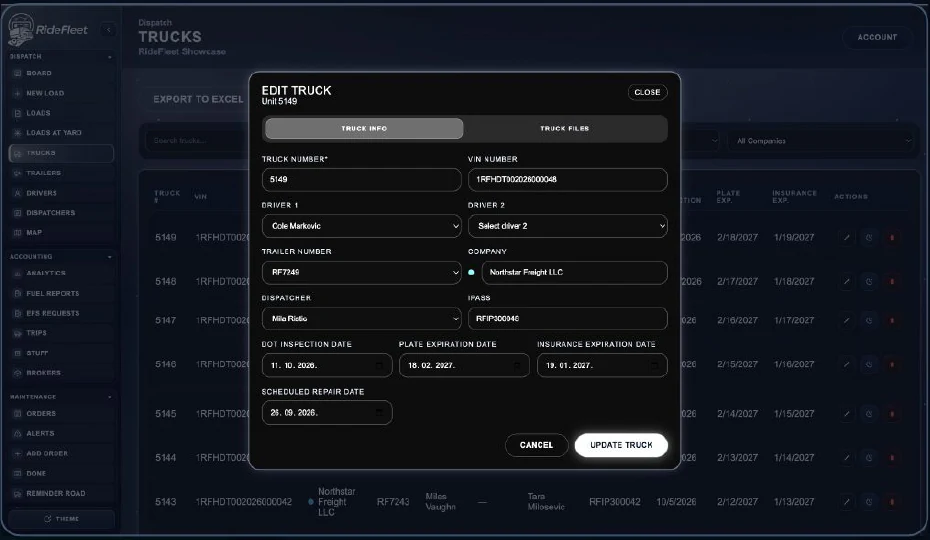
Fleet workspace
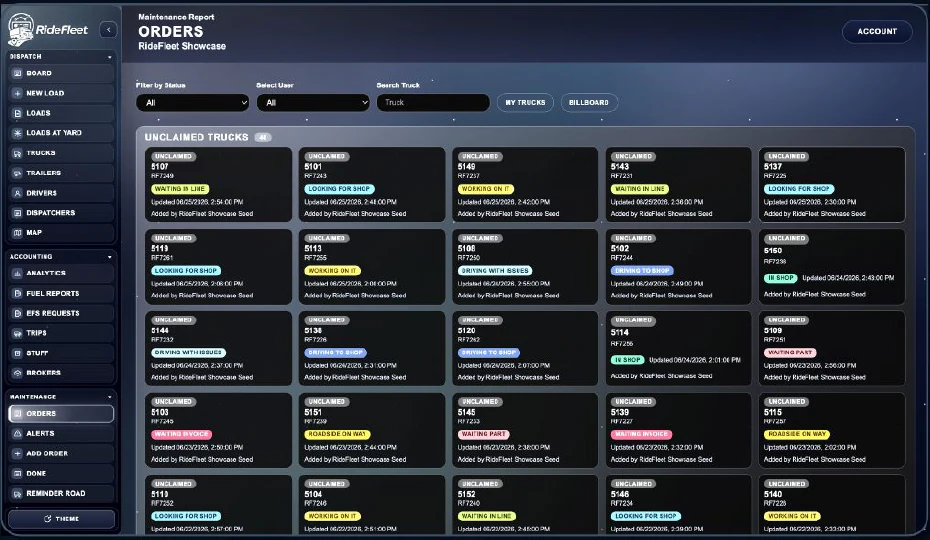
Maintenance operations
Operational analytics
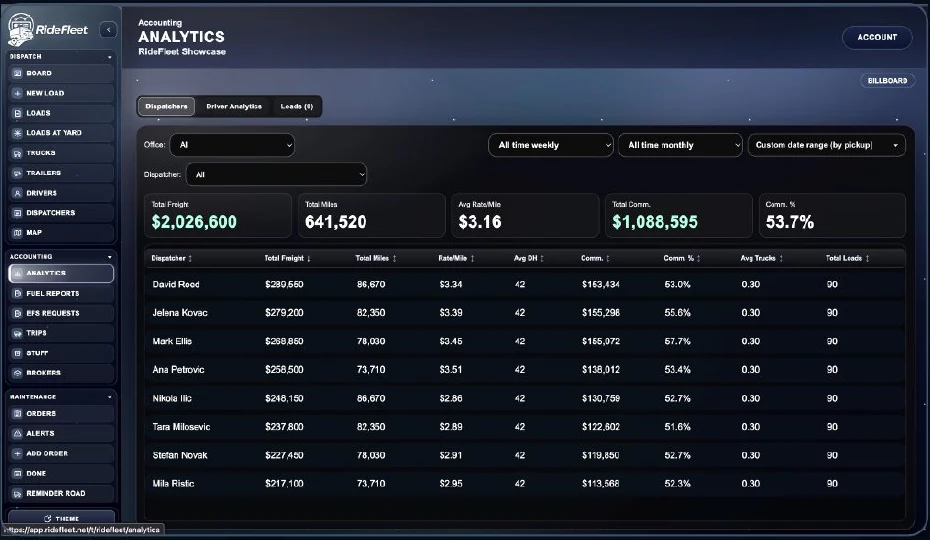
All screenshots contain synthetic demonstration data and do not represent live customer operations.
Plans
Paid plans scale by active truck count. Provider-dependent services and usage boundaries are confirmed during setup.
Demo access
Up to 5 active Board trucks, 20 lifetime load creations per stable truck, and 14-day locked retention.
Starter
For small teams moving core dispatch and load work into a shared system.
Growth
For growing operations coordinating more equipment, people, and records.
Scale
For established fleets that need broader operational coverage and controls.
Business
For larger operating models that require a scoped rollout and commercial review.
Plan availability, included capabilities, integrations, and third-party costs may vary. Review current terms before purchase.
Implementation
RideFleet setup is shaped around your current operation, access needs, and provider dependencies.
Plan your rolloutDocument teams, handoffs, records, and the workflows in scope.
Set roles, operating structure, and agreed system boundaries.
Test the workflow with the people who will use it every day.
Refine the operating model as usage and requirements evolve.
Contact
Share the size of your team and the handoffs you want to connect. We’ll respond with a practical next step.